


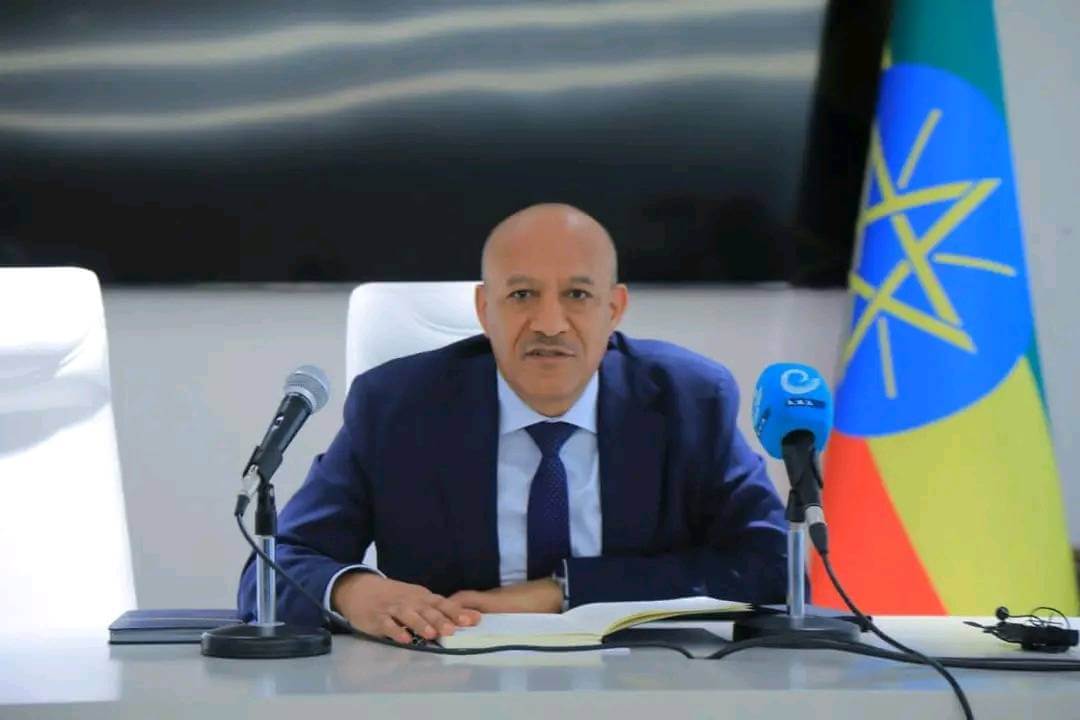
Girma Tsehay
ADDIS ABABA — Ethiopia’s strong efforts to curb the FANO militia’s resistance against the integration of regional forces into the Ethiopian Army have yielded significant progress. The Amhara militia, historically independent from central government authority, has long posed a challenge to Ethiopia’s pursuit of a unified national military structure.
Recent developments saw the group escalate its opposition, engaging in armed conflict with government forces and captured two key cities.
Responding to mounting tensions, Prime Minister Abiy Ahmed convened a crucial meeting of the Council of Ministers to address the crisis in the Amhara region. Discussions focused on the surging activities of local vigilante group FANO, which seeks to topple the Federal Government and establish dominance across the nation.
Concerns over stability prompted a swift decision; the declaration of a State of Emergency to maintain law and order. In a strategic move, the Council of Ministers appointed the Chief of Intelligence Temesgen Tiruneh to lead an operation aimed at restoring stability in the region. This choice underscored the gravity of the situation and the government’s commitment to ending the vigilante group’s bid for power.
The Amhara region’s historical significance makes these developments particularly concerning, as tensions between FANO and government forces have escalated in recent weeks.
Responding decisively, Ethiopian government troops successfully recaptured the cities of Gondar and Lallibela, two important power bases for the militias.
The successful takeover of the group’s key strongholds, marks a crucial turning point in the ongoing efforts to consolidate the country’s armed forces.
According to the analysts, the latest military advances also underscore a remarkable shift in the balance of power, tilting it towards federal officials. It will likely pave the way for federal authorities to assert firm control over these influential militias.
This shift not only signifies a potential end to years of discord but also sets the stage for enhanced cooperation and synchronization within Ethiopia’s military structure.
For years, Ethiopia has grappled with internal conflicts driven by power struggles among influential regional forces that frequently operated independently, sidestepping federal oversight.
The long-standing challenges posed by the regional states have long remained a major concern for the nation’s leadership. The culmination of these issues came with the devastating two-year-long conflict between Federal Government troops and the regional forces of the Tigray People’s Liberation Front (TPLF) in the northern region.
The bloody conflict, which resulted in thousands of casualties and the displacement of millions, underscored the substantial power wielded by regional forces and the threat they posed to the federal government.
In a recent televised address to the nation, Prime Minister Abiy said that the transition towards a centralized army will not only bolster the country’s capacity to counter security threats but also would reaffirm their commitment to national unity and coherence.
Nonetheless, the announcement has ignited strong debates and raised concerns from various quarters, with some regional officials argue that this shift could potentially erode regional autonomy and escalate tensions in ethnically diverse regions.
They contend that their regional forces play an important role in managing localized security issues and upholding harmony within specific communities. However, a government spokesperson responded to these concerns, stating that the government’s intention is not to undermine regional security, but rather to create a more coordinated and efficient national security structure.
CENTRALIZING ARMY: A PATH TO UNITY
For years, Ethiopia has struggled with the destabilizing consequences of these powerful regional entities, whose assertive actions have not only tested the limits of constitutional autonomy but have also acted as a constant source of tension, rendering unity elusive and development efforts fragmented.
The dynamics between the regional power centers and the central government have marred the nation’s progress, hindering both economic growth and efforts to establish lasting security.
The long-running struggle for control and influence has created a fraught environment, pitting the ambitions of regional forces against the cohesive policies of the federal government.
Beyond these concerns, a more profound issue of ethnic superiority mindsets and disregard for the federal administration’s legitimacy has compounded the complexity.
The ongoing tug-of-war for control and sway between regional forces and the central government has stymied Ethiopia’s advancement for an extended duration.
The regional states have frequently acted as independent power hubs, consistently undermining the central authority’s power.
This, according to federal officials not only threatened the country’s unity but also obstructs cohesive efforts towards progress and safety.
One of the notable consequences of regional forces’ existence is the cultivation of ethnic superiority ideologies. Instead of granting autonomy to various ethnic groups, their structure has inadvertently fostered division.
Accusations point to these forces promoting an “us versus them” mentality, exacerbating inter-ethnic tensions and stunting the nation’s harmonious development.
Furthermore, the unyielding resistance of regional forces to directives from the federal government has further hampered Ethiopia’s national security aspirations.
Their defiance of central authority has perpetuated an ongoing instability, undermining the government’s attempts to enact unified policies beneficial to all citizens.
According to federal government officials, this approach also hinders economic growth and jeopardizes national security, solidifying their argument that disbanding regional forces and integrating them into a united national army presents the practical path for Ethiopia’s brighter future.
ADDRESSING SUBVERSIVE ELEMENTS
In the intricate tapestry of Ethiopia’s political and security landscape, the call for unity and coherence cannot be overstressed. The dissolution of regional forces and their integration into the national army stands as a pivotal measure towards achieving enduring stability and advancement for the nation, government representatives contend.
Regional forces have played a pivotal role in fanning the flames of tension and discord within the country. Their presence often leads to resistance against federal authority, breeding uncertainty and division.
To confront this crisis and foster a sense of national solidarity, Prime Minister Abiy Ahmed insists on dissolving these regional units, redirecting their energies towards a centralized national defense strategy.
Ethiopian army officials argue that the exercise of unconstitutional independence by regional forces has eroded the very foundation of Ethiopia’s democratic framework.
Through undermining federal directives and asserting their own agendas, these forces have disrupted the smooth functioning of the nation’s governance structure.
Although the ongoing conflict is seen as yet another blow to Ethiopia’s stability, experts argue that it could serve as the final impetus for the current government to dismantle the federated security agencies and establish a unified control across the nation.

Facebook Comments